




A vehicle’s drivetrain system makes motion possible, enabling it to travel from one destination to the next. But despite the component’s undeniable importance, many don’t know the difference between the various types of drivetrains. This not only leads to confusion, but makes it tricky to determine which system is best for you.
Composed of the transmission, driveshaft, and axles, the drivetrain system transfers power from the engine to the drive wheels – either the front two (front-wheel drive), rear two (rear-wheel drive), or all four (all-wheel or four-wheel drive).
Here at your local Jeep dealership in High Point, our inventory includes many four-wheel (4WD) and all-wheel drive (AWD) Jeeps for sale. Both systems perform well in inclement weather and demanding road conditions, but there are some key differences between the two.
Read on to learn more about the difference between AWD and 4WD systems, including the advantages of each.

Breaking Down the Difference Between AWD vs. 4WD
At Ilderton Dodge Chrysler Jeep RAM, our team believes that knowledge is power. Here’s what you need to know about the differences between all-wheel drive and four-wheel-drive systems – including power distribution, traction control, engagement, and adaptability to diverse driving conditions.
Power distribution
All-wheel drive (AWD) and four-wheel drive (4WD) both distribute power to all four wheels in efforts to optimize traction. However, they differ in how power is distributed, when the system is engaged, and what conditions they’re best suited for.
AWD vehicles can distribute power to individual wheels, providing optimal grip and stability. This leads to improved handling and acceleration, resulting in a smoother and more secure driving experience.
Four-wheel drive (4WD) systems channel power to all four wheels, typically split evenly between the front and rear wheels. Most often, 4WD systems feature a transfer case that divides power evenly between the front and rear axles, with some advanced models incorporating locking differentials for enhanced off-road capability.
Engagement
All-wheel drive systems are always active, utilizing sensors to test whether the front or rear axles should receive the most power. Based largely on the current road conditions, the AWD system sends varying amounts of torque through locking differentials and clutch packs. Keep in mind that four-wheel drive (FWD) systems typically need to be manually engaged by the driver.
Driving Conditions and Capabilities
For residents of wet or cold climates, AWD is ideal for everyday driving. When slick, slippery conditions arise, all-wheel drive helps drivers maintain control.
4WD vehicles are built to travel safely and securely on uneven, rugged terrains and can be trusted with demanding workloads. You’ll find 4WD available primarily in Jeep SUVs and Ram trucks designed for off-roading.
Power Your Drive with a New Jeep for Sale in High Point, NC!
As your hometown dealer, we hope this comparison guide clears up any confusion. Ultimately, the vehicle you choose will be based on your driving needs, and the conditions you’ll encounter most frequently.
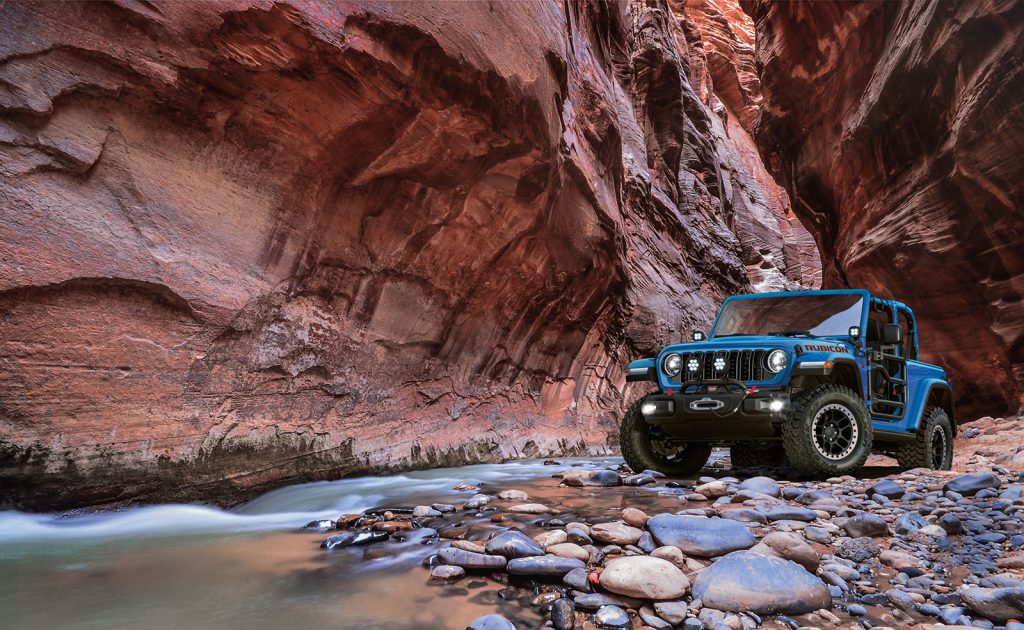
If you plan to drive off the beaten path, a 4WD vehicle like the Jeep Wrangler is an excellent choice. This durable SUV is designed to accommodate a 4WD system’s weight so it’s ready to answer the call of the wild at a moment’s notice.
Check out our inventory of SUVs for sale at our Jeep dealership in High Point, North Carolina, including:
- 2024 Jeep Wrangler
- 2024 Jeep Gladiator
- 2024 Jeep Grand Cherokee
- 2024 Jeep Compass
- 2024 Jeep Grand Cherokee L
If you’re looking for a 4×4 vehicle for work instead of play, check out our variety of powerful RAM pickups!
Connect with us


Archives
- 2024 Chrysler Pacifica
- 2024 Dodge Charger Daytona
- 2024 Dodge Durango Trim
- 2024 Dodge Hornet
- 2024 Grand Wagoneer
- 2024 Jeep Gladiator
- 2024 Jeep Grand Cherokee
- 2024 RAM 1500
- 2025 Ram 1500 Ramcharger
- 2025 Ram 1500 Tungsten
- A First Look at the Electric 2024 Jeep Wagoneer S
- All-Wheel Drive Vs. Four-Wheel Drive
- Car Care
- chassis cab
- Chrysler
- Community
- Education
- Employees
- Exterior Paint Colors
- High Point Chrysler Dealer
- High Point Chrysler Service
- High Point New Cars
- Ilderton Chrysler Dodge Jeep Ram Fiat Service
- Jeep
- Jeep Wrangler
- News
- Podcast
- Promotional
- Ram
- Ram 1500 REV
- RAM Lunar-Themed Special-Edition Heavy-Duty Trucks
- Uncategorized